Books That Built Patrick
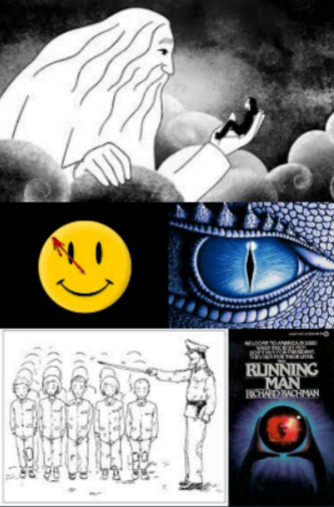
These five texts have contributed to a great many attributes of my character as an American, but more specifically, as a future military member. As such, they appeal to my sense of justice and ethics, as well as fairness, perseverance and honor. These books represent these ideals not only through the stories they tell, but through the messages and themes they evoke.
1. Honor: Eragon

The first book that contributes to my character happens to be one of the first books I placed moral value on. My elementary school had required students to read and take tests on books. Rather than have to read several smaller books, I opted for Eragon, by Christopher Paolini. Initially, I had chosen this book for it's size, and this fact alone satisfied my reading quota. I soon realized the virtue in this novel. Eragon tells the story of a young farm boy who finds a dragon egg and raises a dragon to fight evil. I was familiar with the fantasy elements present in the novel; however, I absolutely loved how the character spent most of his time on how to best serve the interests of the kind-hearted people in his town, evoking a messiah-like aura. This book showed me that an ordinary person in extraordinary circumstances can make all the difference in the world.
2. Perseverance: Escape From Camp 14

This nonfiction piece tells the story of a North Korean defector, Shin Dong-Hyuk, who escaped a brutal internment camp. His tale of brutal survival and harrowing escape in 2005 showed me how lucky I was to have been born in a free environment. While others suffer a world away, I can live a life of relative comfort. This biography detailed the lengths at which Shin had to endure to ensure his continued survival at the hands of the brutal cult of personalty surrounding North Korean leadership. Whenever I feel like giving up, I think of individuals like Shin, who was born into a world of suffering, but managed to survive the worst life had to throw at him.
3. Fairness: The Running Man

The third book in the collection is my personal favorite, and it tells the story of a man who struggles against a world that wants his death for entertainment. The protagonist is put at odds with a society that does not place any trust in its citizens, rather, it abuses its people. I adore this book because it plays with the concept of fairness, and ultimately, its impossibility. Ben Richards, an blacklisted family man, chooses to compete in a rigged competition in order to support his impoverished family. Richards is given no support during his odyssey as an enemy of the state, and fairness is thrown out the window. An important lesson from this text that I took was that life isn't fair, but you should never let this fact dissuade you from your goals and aspirations. Furthermore, if you're in a situation that appears unsolvable, sometimes you have to think outside the box and outsmart the system.
4. Justice: Watchmen

The fourth book in my bookshelf was my first dive into graphic novels and their interpretation as serious literature. Though I was taken aback by the unique art style, I was more entranced by the nihilism expressed by the many retired heroes in the story. Only one character,(Rorschach), maintained a constant sense of justice and commitment to stopping crime. Rorschach certainly didn't perfectly personify justice, but he made the distinction between vengeance and justice. It's this important line in the sand that is the most meaningful to me. I will never take justice into my own hands, and I will always try my best to trust the system and its process. I learned from Watchmen that the most just choice is not always the choice I agree with, and I try to communicate this sense of acceptance in reading discussions.
5. Ethics: Persepolis

My fifth and final addition to my personal bookshelf is my selection from this class's reading. The lessons I took from Persepolis were mainly ones involving ethics. As a person who hopes to join the military, I am expected to be capable of making ethical decisions. Where I think Persepolis shines in teaching about ethics is the evolution of Marjane's character and independence. As a child in America, I was exposed to several media outlets, so I was able to formulate my own opinions on right and wrong. In Marjane's society; however, the media is essentially controlled by whoever is in power. Furthermore, Marjane's status as a woman affected how she was 'expected' to act. From this book, I learned how people in a controlled environment work through ethical problems. Marjane beliefs on societal wrongs were heavily influenced by whoever was in power, and she her thought process was very linear. I'm glad I live in a world where my opinions are my own and not the products of a political regime.
