Showing posts with label The Handmaid's Tale. Show all posts

Monday, November 27, 2017

Caleb's Virtual Bookshelf

Caleb's Virtual Bookshelf


Great Expectations


At first, the winding nature of Great Expectations and the length of it bored me. Due to this, I put it down for a month or two and then went back to it. Again, it initially bored me, but this time I read further and slowly became increasingly immersed in the twisting story. The main thing that captured my attention was the mystery as to who Pip's benefactor was. Initially, like Pip, I had assumed that his benefactor was Miss Havisham. I was surprised to find out that it was a convict by the name of Magwitch who had found his fortune in the colonies. This book taught me patience due to the initial boring investment of time that led to a fascinating story. It also taught me to not trust assumptions because they could always be proven wrong, like Pip's assumption/expectation as to who his benefactor was. Akin to other books that we read in class (Gulliver's Travels), this book serves to critique society, specifically the justice system of the English.

Their Eyes Were Watching God
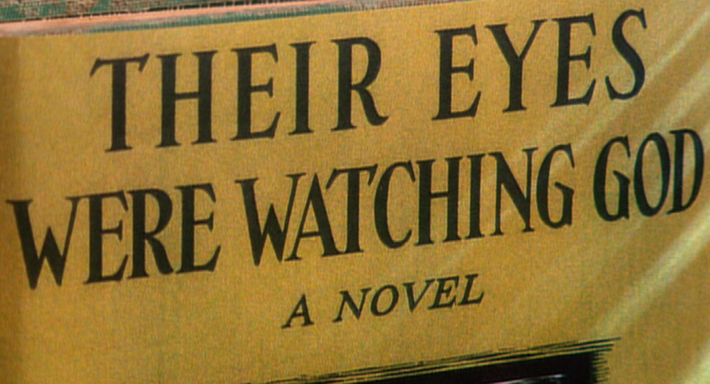

Their Eyes Were Watching God by Zora Neale Hurston is a piece of literature about a young African American woman named Janie and the struggles that she finds throughout he life with regard to relationships and racial discrimination. I found this book to be powerful because it not only addressed racial discrimination and its evils (which I had seen addressed in other books before); it also demonstrated how this racial discrimination affected every facet of Janie's life, whether it be her relationships, her perception to others, or her economic status. Thus, this book allowed for me to have a greater appreciation of how minorities are affected by discrimination. Like other books that we read in class (Beloved), this book serves as a commentary on racial discrimination and how powerful of an effect it can have on a person's life.

All the King's Men


All The King's Men is a novel that changed my fundamental understanding of politicians and politics in general. The story is told from Jack Burden's perspective. He serves as a political advisor to Willie Stark, a politician who eventually become the governor of an unnamed state. By providing the perspective of a political advisor (Jack), the politician (Willie) can be foiled uniquely in a way that juxtaposes with the way that the public perceives him. This book taught me that there is a large and sometimes dark underbelly to politics that the public does not know about. I learned that this underbelly should be recognized and that we should be aware of it at all times. Like with other books that we read in this class (Dante's Inferno with the Guelphs and the Ghibellines), one of the purposes of this book is to serve as a political commentary. 

Fahrenheit 451
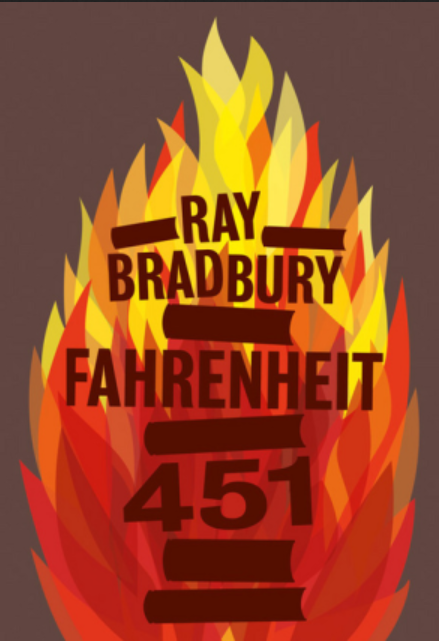

Fahrenheit 451 is a book that has influenced my views upon the extent to which a government should be able to play a role in our lives. In the story, a dystopian society revolves around the concept of quick and fleeting pleasure and has firefighters that burn books instead of putting out fires. The main character, Guy Montag, is one such firefighter who ends up reading the forbidden books. Not only did this book make me question how much power a government have, it also made me question the value of quick and fleeting pleasures. I discovered through this masterpiece that long-term pleasures are the only truly valuable ones. Like other works that we have read in class (Gulliver's Travels), this work is a commentary upon Western society, where short-term pleasures are typically valued more than long-term ones.

The Handmaid's Tale


The Handmaid's Tale is a book that has taught me to value my basic human freedoms and liberties and to not take them for granted. In the story, Offred is forced to serve as a fertile concubine after her basic freedoms are slowly stripped from her following a coup in the United States. This strikes to home for me because I live in the United States, where these basic human freedoms are currently guaranteed. It is unimaginable to think about my personal freedoms being striped from me and this book gives me a sense of horror in that aspect. Like other works that we have read in class (Persepolis), this work highlights and attacks the basic human nature of taking our rights and privileges for granted.

Sunday, November 26, 2017

Kristen's Bookshelf

For my Virtual Bookshelf, I decided to rip off pay homage to Quentin Blake's illustration of Roald Dahl's Matilda. It seems fitting since I am a PhD candidate in Children's Literature and writing a dissertation on representations of gifted children in literature. My Matilda-esque self is reading Toni Morrison's Beloved, JK Rowling's Harry Potter and the Deathly Hallows, Neil Gaiman's American Gods, Marilynne Robinson's Gilead, M.T. Anderson's Feed, Anne Lamott's Small Victories, Kristin Cashore's Fire, and Margaret Atwood's The Handmaid's Tale


1. Beloved

I chose Beloved from the class readings because I learn more from this text each time I teach it. When I read it in undergrad, I focused most of my attention on whether or not the character of Beloved was an actual human, a supernatural figure, or a metaphor, and I did not pause to appreciate the beauty of the language in small passages or understand the larger message on healing from trauma. Now, having taught it three times, each time I reread it I notice more depth to Morrison's narrative of healing through self-compassion, touch, and spiritual renewal. Further, one of the reasons I read is to understand concepts like history, community, and nation through new lenses and perspectives, and this is something Beloved offers me. Beloved invites me to reconsider our nation's history and present moment, and I think that makes it a valuable text.


2. Harry Potter and the Deathly Hallows

I have a lot to say about the Harry Potter series: it was a big part of my adolescence, so much so that my mom worried that I was trying to become an actual witch. I think the whole series is genius and lovely in all the right ways. It is probably the reason I added English as a major in undergrad and was the subject of many of my term papers, but I singled out Deathly Hallows because I think that one, more than any of the others, speaks to this question of why we read. One of the reasons that we seek out literature is to gain a better understanding of what it means to be a human, and this means coming to terms with our own mortality. Deathly Hallows grapples with this question in a way that feels authentic, which is so important in literature for adolescents. 


3. Fire

Sometimes when you study a subject for a living, you can start to lose the joy that drew you to the subject in the first place, or at least this is something I've experienced. The more critical theories, cultural contexts, literary arguments I was exposed to, the more critical my reading became. Suddenly, books that I used to enjoy seemed trite, cliche, sexist, etc. etc. etc. Fire restored my ability to find joy in a genre that I used to love but was giving me some trouble because of its frequently sexist, racist, and cliched plot conventions. Kristin Cashore's Fire trilogy gave me heroines I could root for and gave those heroines endings that that didn't tame or contain them. Whenever anyone asks me for a book recommendation, this is where I start. Fire is feminist, inclusive, and stacked with well-developed characters and compelling plots. Sometimes we just want to read for a sense of escape or adventure, and Fire is one of my all-time favorite reads for this purpose. 


4. Gilead

Over the last few years, I have gotten into Marilynne Robinson's books. I describe Robinson's works as both American pastoral and spiritual memoir. Before Gilead, I was not much of a fan of slow reading, though I did love Far From the Madding Crowd and Anna Karenina, both of which were slow, leisurely reads for me. But Robinson does not even employ normal chapter breaks in Gilead, so the whole book felt like one long conversation, and I would alternate between days of reading two pages at a time and days of reading fifty pages in one sitting. The lack of chapter breaks allowed me to determine my reading pace, and in doing so I discovered the power of Robinson's language. She masters and manipulates a sentence like no other author I've read. I read her books as much for her syntax and prose as I do for the character development and story, which isn't true for most of my reading. I also love her Gilead trilogy because it explores all of those big topics that draw us to literature--love, family, death, spirituality, and home. 


5. The Handmaid's Tale

Everything Margaret Atwood writes is brilliant. She's a genius at combining beautiful and poignant language with terrifying visions, and every horror that she imagines seems both possible and familiar, which makes them even more terrifying. I love Oryx and Crake, but The Handmaid's Tale feels too pertinent to the present moment in American history to be ignored. Atwood is so good because she imagines something horrifying--women forced into reproductive servitude--but she uses realities of our world to construct this result. Nationalism, religious fundamentalism, misogyny, greed, and global warfare cause the men of Gilead (not the same Gilead as Robinson's) to come up with the idea of handmaids. We can recognize these forces in our own society, which makes us feel all the more uneasy about the handmaids' plights. I thought the Hulu adaptation was excellent, but I also recommend reading the book. The Handmaid's Tale is a book I read to stay vigilant (constant vigilance!) in my present historical moment even as I am horrified by future dystopian visions. Relatedly, I also recommend Alias Grace on Netflix, which is the next Atwood book I plan to read. 

Finally, I can't stop myself from saying something about the ones I didn't highlight in my five choices. I included American Gods because it opened my eyes to the ways in which America's heritage as a nation of immigrants enriches our national mythologies and lends itself to powerful storytelling. I also think Neil Gaiman is one of our most talented living writers. I included Small Victories because I find Anne Lamott's combination of humor, curmudgeonly attitude, and grace to be very helpful when I am feeling down. And I think Feed is one of the best YA books, one which truly speaks to the logical consequences of our current way of life. The opening line of the book is one of my favorites: "We went to the moon to have fun, but the moon turned out to completely suck." How can you not keep reading?