Showing posts with label Harry Potter. Show all posts

Monday, November 27, 2017

Brooke's Bookshelf


The Perks of Being a Wallflower by Stephen Chbosky

  • The Perks of Being a Wallflower remains one of my most frequently quoted novels. Advising my life and my friends’, The Perks of Being a Wallflower features as one of the most relatable and relevant books I have ever encountered. For Literary Society, I created a presentation based on this book and the universal understanding of some of the conflicts the characters endure continues to serve as  one of the pivotal characteristics instilled by Stephen Chbosky. Last year, I reminded my friend almost daily that “We accept the love we think we deserve” and “can we make them know that they deserve more?” “We can try” (Chbosky). Throughout life, people seem to forget their own importance, but people deserve to seek happiness - even those who do not believe they earned it. “You can’t just sit there and put everybody’s lives ahead of yours and think that counts as love,” since I always put others before myself, and this statement serves as only one example of the quotes from this novel that I frequently try to remember in my daily life (Chbosky). Above my bed, on my wall, I have a collection of quotes, and The Perks of Being a Wallflower often serves as a positive reassurance in my life.

  • In regards to why we read, The Perks of Being a Wallflower applies extremely personally to my life, but universally has this individual effect on so many people. Langston Hughes’ poem, “I,Too” similarly speaks of individual experiences that represent a larger community. The power writing has to articulate thoughts an individual may have never managed to clearly identify and describe, and the ability to highlight how others can relate to the experiences we have, makes books like The Perks of Being a Wallflower especially poignant.

The Harry Potter series by J.K Rowling

  • Harry Potter may not classify as magical realism, the genre of books such as Beloved, but the realistic problems addressed in a magical community contributes to the series’ ability to shape children’s development. Focusing on a boy wizard, the series manages to cleverly introduce the problems of racism and classism, thereby shaping the way young children reading the novels view the world. As a child, these books tended to dictate what qualities should hold the most importance. When people viewed an avid reader and studious student as a model, it became increasingly important to remember that “There are more important things- friendship and bravery” (Rowling). With bushy hair and a love for reading, I related to Hermione Granger, who showed that choosing to spend time in the library or studying could prove more helpful than harmful. I never needed a large group of friends as long as I knew I had at least one person I could trust to always support me and care for me. Often finding reasons why people do not deserve my trust with great ease, I finally found people that continuously prove how much they care about me. Accustomed to individuals using me for homework help or questions related to school, Hermione’s ability to find such secure friendships gave me hope. Also, my favorite quote, “Happiness can be found even in the darkest of times, if one only remembers to turn on the light,” continues to hang on my wall and serve as a powerful reminder that, in spite of how hopeless a situation can seem, I have the power to create a better environment or experience.

  • The Harry Potter series confirmed my love for reading. With the ability to escape to Hogwarts and a world of magic concocted by J.K Rowling, I discovered one of the primary opportunities books can offer. Without the Harry Potter series, I think my life and personality may have developed differently. J.K Rowling may have crafted the series due to financial concerns for her family, but her works still resemble art- speaking to people across the world to change their views and opinions while offering entertainment. The way Rowling mingles enjoyment with the discussion of serious issues embodies a major reason people read.The reasons people write and read remain incredibly diverse, but the combinations of motivations allow for a wide impact and varied perspectives on specific subjects that, when evaluated, can contribute to strong, inclusive, arguments.


Thirteen Reasons Why by Jay Asher
  • The honesty in this book experiences few rivals. Thirteen Reasons Why exposed, to me, the impact that words and actions can have, and while one person may think nothing of a situation- it could change someone else’s life. Even with the realization that anything could significantly impact other people, the exposure Jay Asher offers allows readers to truly recognize that words and actions could mean more than expected. This book altered how I viewed the world, and made me more aware of the minutiae that can impact people. Throughout my life, I have had an array of encounters with struggling individuals, and I have found it increasingly important to always try to understand other people as thoroughly as possible and consider all of the possible circumstances or outcomes they may face so that I can try to effectively assist them in handling the difficulties they endure.

  • Thirteen Reasons Why seeks to reveal the harm people can cause, in the hope of making society more aware of the problems it perpetuates. Through utilizing literature to raise awareness, hopefully society can progress and minimize the negativity surrounding people on a daily basis. Through highlighting the detrimental and destructive actions that some people feel forced to succumb to, maybe others will learn to remain more cognizant of their interactions and treatment of people. Jay Asher vividly portrays subject matter that other authors or creators may tend to shy away from. With a bold approach to a serious topic, Jay Asher writes to try to instigate change and prompt positive growth.

The Fault in Our Stars by John Green

  • John Green powerfully depicts teenagers struggling with life-changing and life-threatening illness in The Fault in Our Stars, and his portrayal of relatable characters that exist as people separate from their disease, emphasizes the importance of recognizing people for their complexity and refraining from judging people based on one detail. Hazel struggles with the pity and judgement passed upon her by the prominence of her oxygen tank, but the novel reveals the similarities “sick” individuals have to those considered of “normal” health. My grandfather died of lung cancer, and one of my friends from high school just finished treatment for osteosarcoma (the cancer that plagues Augustus in the novel), and The Fault in Our Stars reminds me of the power people retain to enjoy life in spite of the afflictions they face. Love and life can exist even in the face of death, and The Fault in Our Stars serves as a powerful testament for the capabilities of individuals to maintain control of some aspects of their lives even when certain components seem uncontrollable. The power of choice, deciding how to approach a situation, can make all of the difference in a person’s life. This idea has since come to govern my views in the world, and I have tried to become less afraid to take chances and try to have more diverse experiences.

  • The theme of life and death in The Fault in Our Stars serves as reminiscent of the theme of life and death in “The Dead” by James Joyce. Augustus lives to seize every moment, recognizing that he may not have the opportunity to waste any time due to the threat that cancer poses to his life, while Hazel has a preoccupation with not seeming like a grenade to the people around her, so she tries to minimize the effect she has on others in hopes of having her death not cause as much pain. In Joyce’s “The Dead”, the lifeless house party critiques the living that do not seek to truly experience life.  The focus on the haunting nature of death in both stories attests to the prevalence of the theme, thereby suggesting the ability people from different backgrounds have to relate to the ideas.


Persepolis by Marjane Satrapi


  • Typically, I do not find myself seeking out memoirs nor trying to find graphic novels, but Persepolis introduced me to a new reading experience that I enjoyed. Satrapi’s memoir allowed for the examination of the experiences that shaped her development, while offering a unique perspective on Iranian politics and culture. Reading Persepolis enabled me to gain a better understanding of the people and history of Iran, which contributes to building my ability to consider policies and ideologies that impact that region with a more broad comprehension of the subjects and situations. Previously, I had a limited exposure to information regarding Iran, so the evaluation of the nation through the honesty of Marji offered me a seemingly authentic view of the state of affairs regarding Iran. Due to the introduction of this book through class, I have a new outlook on life in America compared to life in other nations. The strength and poise with which Satrapi explores her nation contributes to the image people in various may develop, but the desire to learn the truth reveals the impact art can have in portraying information.

  • The opportunities for development, understanding, and growth presented by novels such as Persepolis contribute to the possibilities that readers have to foster comprehensive, diverse groups and conversations. This ability to become a more cultured, understanding person leads me to find the appeal of reading more historically- focused novels.


Reading changes lives- it shaped and changed mine. 

Angello's Virtual Bookshelf

Angello's Bookshelf


1.     Harry Potter and the Sorcerer’s Stone – J.K. Rowling


A choice many will make, this book peaked my curiosity at the power of the human mind. The books of Harry Potter reveal a world of wonder in words that you then create inside your head. While reading, the creation of places such as Hogwarts, Hogsmeade, and Little Whinging were created effortlessly and subconsciously. Once I put the book down for the first time, I realized I had created a world inside my head, one which contained my own version of the shade of red for Gryffindor, my own interpretation of just how high the seats at the quidditch game were, and my own vision of how old Albus Dumbledore really looked. Literature is written for many reasons, and one of those is to entertain. Throughout this course, we’ve learned that there does not have to be a reason why an author writes a book other than they simply wanted to, but I believe J.K. Rowling wouldn’t have written her seven installments if not for her then situation. I believe this fueled her imagination and in turn, peaked mine. Nevertheless, I first read Harry Potter to keep myself busy, and ended up reading all seven books because I was hooked on the joy of wonder.


2.     Percy Jackson and the Lightning Thief – Rick Riordan

Percy Jackson and the Lightning Thief was just as much fun to read as any Harry Potter book, however this book shaped my way as a scholar more than anything.  The creativity of the story, along with the dynamic characters are what captivated me, but what really hooked me onto the book was the huge role of Greek mythology in the story. Every small detail written into the plot was an allusion to a Greek God or myth, a personification of some Greek monster, or a direct quote from Greek epics or myths. This book addresses the big picture question of what we can learn from books, and for me, this book taught me to appreciate Greek mythology’s various tales, epics, and heroes. Riordan set out on a quest to entertain with the writing of Percy Jackson, but also made it his mission to teach and educate the youth about a series of heroes and legends that should never be forgotten about. 


3.     1984 – George Orwell


George Orwell’s 1984 was a reading assignment introduced to me about 5 years ago. Before then, books were simply a way to pass time and indulge myself in worlds of wonder. This book was a game changer. I was tasked with identifying and analyzing the intents and actions of the protagonist, Winston Smith. My book was riddle with sticky notes full of predictions that were ultimately wrong. Instead of getting frustrated, I found myself fascinated at the way Orwell indulged us into a political conversation that boggled our brains throughout the story. This book was an example of political commentary that spoke volume about its time, and future times to come. I began reading this for a grade, but ended up reading it because of its ability to shed light on political conspiracies. It has shaped how I carefully approach books, and how effective I am when it comes to breaking down passages. Throughout our course, we have discussed how authors use their platform for political commentary, such as with Dante's Inferno, and this book is no exception. The same approach was used, but with Orwell's being more obvious and direct towards his government. The result for me, however, was the same; I was fascinated and shaped into understanding a viewpoint that helped me question my own political standpoint. 


4.     Stiff – Mary Roach


Mary Roach’s Stiff was another high school assignment from previous years. From all the choices, this piece of literature singlehandedly has shaped who I am today the most. The book is simply a record of Roach’s observations with human cadavers, but offers so much more. From the sarcastic tone, to the medical jargon, to the descriptive imagery; this book has it all. The fascination that instilled Roach with cadavers was transferred to me. This book showed me I was a closeted medical student. Because of this realization, I applied to all the best medical colleges, joined HOSA, and began volunteering at hospitals. Simply put, the simple assignment to finish this book was a one-way ticket to my eventual destiny. As with Persepolis, Mary Roach’s Stiff was written to shed light on an important topic. Persepolis was written to showcase the horrors of Iranian life during times of war, and Stiff was written so more people would donate their bodies to science to help supply the much-needed cadaver storage for medical research. My purpose for reading the entirety of the book, which wasn’t necessary, was simple; her figurative language, sarcastic tone, and her purpose kept me hooked all the way until the end.


5.     Because I Could Not Stop for Death – Emily Dickinson


Last but not least, I came across Dickinson’s poem Because I Could Not Stop for Death as a homework assignment, but ended up, for the first time, enjoying the process of picking apart a poem, dissecting each line, and actually understanding the purpose of each element, and ultimately, the poem. I was never a fan of poetry, but this specific poem made me read more poems in one week than my whole high school career. I didn’t find a connection between the author’s words and my own experiences, but I could understand the message Dickinson was trying to portray. Her purpose, as far as my understanding goes, was to inform readers of the inevitable, and let us know that accepting our fate is sweeter than resisting it. After digging into her figurative language, it became clear to me that there was no other purpose for her to write this poem. After reading it countless times, I came to realize that most poems have such strong purposes for being written, and those purposes show everyone a strong message to be delivered; each different and each as important as the reader makes it. This poem exemplifies why we write and read literature; we write to convey our feelings, emotions, and ideas, and we read to make connections to others who share ideas, emotions, and feelings.

Sunday, November 26, 2017

Brian's Bookshelf

My Development: Books Instrumental to my Personal Growth


Brian Kleeger

-------------------------------------

Magic Tree House - Dinosaurs after Dark


(by Mary Pope Osborne)

Around when I entered second grade, I struggled with reading and lagged far behind my peers in terms of comprehension. One day I decided to pick up a copy of Magic Tree House laying on some classroom shelf, purely because I was interested in the cover. I had no clue that this singular act would spark a lifelong passion for literature; I was simply fascinated by the picture of a little boy riding a dinosaur. After devouring Dinosaurs after Dark in a single day and becoming enamored with this mystical sense of wonder it evoked, I could not be stopped. I felt as if I was adventuring along with Jack and his sister Annie as they traversed through different time periods or landscapes. It was almost as if I had been given free tickets to travel anywhere I desired! I went on to read the rest of the existing Magic Tree House books, and began to carry a book or two wherever I went. In fact, I would even get in trouble for reading in class during lessons or staying up way past my bedtime with a flashlight under the covers. I can safely say that reading Osborne's Magic Tree House series served as a life-changing introduction into the vast world of literature.


-------------------------------------

Maximum Ride series


(by James Patterson)


At the request of a school librarian I had befriended, I picked up a copy of Maximum Ride in 3rd grade. This sweet librarian would pass away later that year, but her contribution to my self-development lives on. Maximum Ride was the first real "chapter book" series I read in full, thus paving the way for more lengthy and complex texts. Patterson's beginning book in the series stands at 413 pages, which doesn't seem like much in retrospect. However, as a little kid 413 pages may as well have been a million pages! I had never read such a daunting text before. With the encouragement of my school's librarian, I tackled the book and finished it much more quickly than I had ever anticipated. Patterson's use of magical realism throughout his series helped acclimate me to fictitious works of literature and grow a true love for the genre. Furthermore, Maximum Ride's length allowed for me to begin reading lengthier novels and expand my general reading capabilities.

-------------------------------------

The Keys to the Kingdom series


(by Garth Nix)


Garth Nix's Keys to the Kingdom series helped cement my initial love for reading, and worked to supplement my early writing skills as well. Nix manages to craft a world laden with grandiose structures, exhaustively descriptive elements, and many metaphorical comparisons. These literary elements allowed for me to improve my own writing skills and more appreciate the beauty a well-crafted sentence can offer. The intricately woven images remind me of Dante's Inferno, which crafted a detailed (and hellish) landscape for readers through literary devices. Nix's storytelling also maintained my hunger for awe-inspiring literature, encouraging me to search for more heavily descriptive fiction as my appreciation for the genre grew. I distinctly recall ordering the last book of the series - Lord Sunday - and looking forward to it for weeks. When it finally arrived on a dreary Thursday evening, I was so excited to read it that I was nearly shaking!

-------------------------------------

Harry Potter series


(by J.K. Rowling)

Harry Potter is the go-to choice for most people when they discuss life-changing literature, but this does not make it an any less worthy choice. Harry Potter's popularity instead substantiates its importance and influence to so many different individuals. The world of Harry Potter is bright and full of adventure around every corner, promising a wonderful ride to any who take the plunge into Hogwarts. Much as readers might gain a sense of compassion after reading Shylock's emotional appeal for understanding, Harry Potter helped teach me the values of empathy and compassion in subtle ways. I sympathized with Harry's abusive upbringing, appreciated Dumbledore's unadulterated compassion toward his students, and recognized the wickedness of his enemies while understanding their warped perspectives. J.K. Rowling's magnum opus was essential to the cultivation of my early sense of empathy. These values were never explicitly forced on me as a reader, but instead offered as something to consider.

-------------------------------------
Persepolis


(by Marjane Satrapi)

Marjane Satrapi's graphic novel is a fascinating look into her troubled childhood under the shadow of Iran's 1979 revolution. Persepolis is the first graphic novel I ever read, and it expanded my sense of empathy for those living under circumstances different than mine. Marjane had hopes and interests very similar to many of us as a child. She liked Michael Jackson, hated having the government tell her how to dress, and had trouble figuring out her place in the world. Marjane is a person like any other with those unique attributes, and they only serve make me question why Americans are taught to hate Iran. Marjane did not choose to be born in Iran nor at that specific time period, so it is only right to fight against those who paint the world with wide bristles. Her memories made me happy, sad, amused, and curious at different times. At certain moments I even drew comparisons to my own childhood, which helped increase my feelings of empathy toward her story.

Marco's Virtual Bookshelf


The Books that shaped me


1) Heart of Darkness by Joseph Conrad


I read Heart of Darkness the summer going into my senior year of highschool and was puzzled by what it meant at first. Marlow goes on this journey into the center of Africa and is bewildered by the behavior of the natives. Kurtz becomes somewhat of a mystical figure in that he has complete control of the natives and has become immersed in their lifestyle. Yet, Kurtz dies on the way back to civilization with the final words, "The horror, the horror". Upon reflection, it is clear that this novel was about colonialism and dealing with people that have different cultures. Going into college this semester, I feel like I can relate to traveling into unknown territory with people from all over that have lived very different lives than I have up to this point. It is easy for people to take their own ways of life and force those things on to other people. I chose to interpret the "horror" that Kurtz described as the manipulation of others beliefs for your own gain. This novel helped me understand that it is important to act responsibly with my culture and to not take advantage of other people by manipulate them to my beliefs.


2) Grendel by John Gardner


Grendel is unique in that it takes place with an antihero as the main character. Grendel is one of the villeins from Beowulf which I had read immediately proceeding my reading of Grendel. In Beowulf he isn't very fleshed out; he was just a monster that was waging war on a town that Beowulf had come to slay. In Grendel, the title character deals with existential crisis that leaves him isolated and confused. Grendel's ego was huge, and he felt like he was too smart for everyone around him. Anytime he tried to be accepted, he was hunted for being a monster. He often yells at the sky and questions his very existence. These are things that are very natural for humans to experience and few books I have ever read deal so bluntly with this topic. Why are we here? What is our purpose? What is real? This novel encourages reflection of the world around you. After reading this novel, I began to ask myself these questions and came to the conclusion that life is all about how you live it. You give yourself purpose by setting your own goals and striving to accomplish them. It doesn't matter why or how we're here, all that matters is that we are here.


3) The Great Gatsby by F Scott Fitzgerald


I read The Great Gatsby my junior year of highschool and it is probably my favorite book I have read. The enigmatic figure of Gatsby captured my attention and I wanted to learn more about him. After learning his story, and that he did it all for Daisy, I began to think they would surely run off together. But things didn't work out. Gatsby was a dreamer and he idealized Daisy to such an extent the he was in love with the thought of her, not the actual person. Gatsby never got the chance to come to this realization. This is something that I myself get very caught up in. Becoming so infatuated with someone that I build them up to be something that they're not. Being ambitious is a good thing, but it needs to be motivated by internal motivation. No matter how much you want someone to be like you imagine them to be, they are who they are.


4) "The Dead" by James Joyce 


After reading "The Dead" this semester, I had to go back and reflect on my own life. Seeing Gabriel try and do everything the right way and please everyone, but have passion allude him, really hit me. I get very caught up in thinking about what the logical choice to make is, and I don't spend enough time actually "feeling". This story showed me that it's not always about what people think about you, but rather the feelings you share. Doing things for the sake of being successful will lead you to an empty life without being truly remembered. Doing things because you are passionate about it is how you can live on even when you are dead.


5) Harry Potter by J.K. Rowling
Harry Potter books were my childhood. The excitement of becoming immersed in a fantasy world with magic and fantastic creatures isn't what makes this books special to me though. The characters deal with loss, curiosity, and adventure. These things may occur in a fantasy world in the novels, but they are very real themes in the real world. J.K. Rowling tells a story with characters that display qualities that are truly heroic. Harry's bravery, Hermione's smarts, Ron's loyalty are all admirable. The countless quirky characters that all have something to say. They fight evil forces that are all about superiority and corrupted power, which unfortunately mirrors some situations in the real world. These novels instilled values in me that are truly good, and for that I will always cherish these novels. Inclusiveness and standing up for what is right are always what I strive for after reading Harry Potter. 


Stephanie Button's Bookshelf


Stephanie Button's Virtual Bookshelf


A Series of Unfortunate Events by Daniel Hadler


          This series is what got me to read. 4th grade SSR time in Mr. Wheeler's class I had always sat there pretending to read, as I had every year before that. But one day I grabbed the second book of this series, The Reptile Room, and I was hooked. This series helped me grow because it taught me adventure, and to always be cautious, aware, and somewhat suspicious. I know this sounds cynical, but you never truly know one's intentions. The Baudelaire's knew of Count Olaf's intentions, but not initially- they learned of his evil ways after discovering his murderous ways to get their family fortune. These books added adventure and wonder to my childhood and I believe that is why Hadler wrote them. They also made me realize how fortunate my family situation is- because the Baudelaire orphans were thrown guardian to guardian for the majority of their childhood. This book connects to creativity within our class because of how bizarre, peculiar, and original every story, description, situation, escape, and plot is.


Harry Potter and the Chamber of Secrets by J.K. Rowling

         It doesn't get any better than the Harry Potter series. I first watched the movies then read the Chamber of Secrets (I know I know basically illegal but yolo) because I had felt that so much had happened in it. I started in 6th grade then life happened and finished in 8th (oops) and since it took me so long to finish, I gradually learned from things within the book that applied to my life at the moment. It taught me to be brave by speaking in front of the class, raising my hand, getting answers wrong and learning from mistakes. It taught me to be curious and ask questions. It taught me to become aware of how others are feeling and aware of peoples actions and intentions. Lastly, the book taught me to infer and read in-between the lines when listening to peoples words and seeing their actions. This book was like another secret life to me- I felt like I knew Harry and all the characters personally, and I think one of the reasons Rowling wrote this: to transport people into a second life.


Beloved by Toni Morrison

        I had initially read Beloved for over summer reading going into 10th grade. When we discussed it in class everyone said they didn't like it, but I was one of few who did. I enjoyed it because it was not like anything I had ever read before. Switching time eras was completely new to me and my classmates and it happened so often you could barely tell which time era you were reading-which is why I think my classmates didn't like it. This was one of the first pieces of literature that really got me to truly understand the horrors of slavery. Yeah you learn about it your whole life and they tell you how awful it was but you never truly understand it until you have a connection with a character. I connected with Sethe,  I felt her pain and suffering- she helped me truly understand how despicable slavery was and question how people could ever let it happen and how it happened for so long. Morrison wrote this piece for everyone's raw understanding of the monstrosities of slavery and to be thankful that it isn't legal anymore.


The Kite Runner by Khaled Hosseini

         I read this during 10th grade and I thought it was the best, most touching, real, raw, book I had ever read- I was taken aback when I had found out that it is supposedly fiction. This is the most emotionally invested I have ever been regarding read- I even had to read certain sections multiple times because I could not believe what I had just read. This is a story about the famous kite race in Afganistan, but mostly about the deep love that can be had within a friendship. This book made me feel sympathy for Hassan because of the adversity he has faced, anger at Amir because of his neglect toward Hassan after the rape, and a whole swirl of emotions in the middle. Hassan taught me loyalty, bravery, and selflessness throughout the whole book-even though he wasn't present in a lot, his demeanor and spirit still were. I think Hosseini wrote this book to bring to light the cultural difference and struggle in the Greater Middle East through a heart-wrenching story.


The Prince of Tides by Pat Conroy

       I started reading this book senior year of high school and it is about Tom Wingo trying to help his suicidal sister through a New York shrink. Through therapy sessions to get to the bottom of Savannah's (his sister) troubles, we get flashbacks of the Wingo siblings adverse childhood. Tom Wingo copes with the memories of his abusive parents and rape through sarcasm and by making fun of himself as a defensive mechanism. From this book, I learned that you cannot control some things that happen to you and sometimes all you can do to get cope is to laugh it off like Tom Wingo. I think Conroy wrote this piece in order to show that people react to obstacles differently and that it is human to do so; Savannah reacted to her rape and traumatic childhood by multiple attempts at suicide and Tom reacted by being very cynical and sarcastic. This book had dark, dry humor and it connects to our class through the theme of improvement by seeking help to recover and cope with past life events.

Virginia's Virtual Bookshelf


Image result for the boxcar children
  1. The Boxcar Children, originally by Gertrude Chandler Warner
I was read this series every night before bed as a child, and it greatly influenced my love of literature and my values as a person. I can still remember my mother’s voice, and how she’d lick her thumb to turn the old pages. This book connects to the theme of why literature is taught. It doesn’t have to be in a classroom. My love of literature was planted in me as a young girl, and grew as I matured. After we read the first book together, I craved more. With over one hundred books, the first nineteen from the original author, I never tired of hearing of their adventures. Even now, I can recall the stories without hesitation- they’re ingrained in my memory. The curious and caring nature of the children influenced me as a person, since I basically grew up with them. This series, especially the first book, has shaped me as a person by instilling family values in my little five-year-old heart and nurturing my growing mind and soul. I’m a better person for having grown up with these books, and I couldn’t imagine my childhood without them.
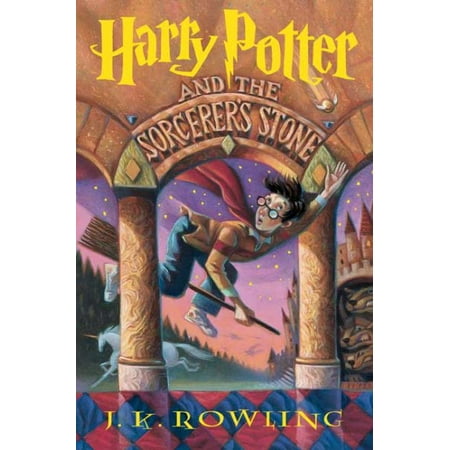
Image result for Harry Potter and the sorcerer's stone book cover
  1. Harry Potter and the Sorcerer’s Stone by J.K. Rowling
Harry Potter was the series that really made me fall in love with books and reading. I read The Sorcerer’s Stone when I was 10, so you can imagine my disappointment when my 11th birthday came and went without a letter from Hogwarts. This book connects to the theme of why we read literature. For me, reading Harry Potter was an escape from a dull school life into one of magic. I quickly read one book after the other, more times than I can count. The majority of my adolescence has memories associated with my love of Harry Potter- including making friends with people based purely on that fact. This book, in fact the entire series, has shaped me into the young adult I am today. It inspired me to persevere no matter the adversity I face, and that "Happiness can be found, even in the darkest of times, if one only remembers to turn on the light."
Image result for gathering blue
  1. Gathering Blue by Lois Lowry
I read Gathering Blue in the 3rd grade, when my love of reading was still a small sapling, just beginning to grow. I had just found it in the library one day and decided to read it, before even reading it predecessor, The Giver. I had judged the book by its cover, sue me-- but it led me to where I am today. The originality of the ideas in the novel were so amazing to me, I was in love with her writing style and the way the words came to life. Personally, this book connects to the theme of why authors write literature-- to create a world outside our own. Experiencing another’s life in a universe different from my own was what sealed the deal for me. I loved reading. Gathering Blue helped me get there.
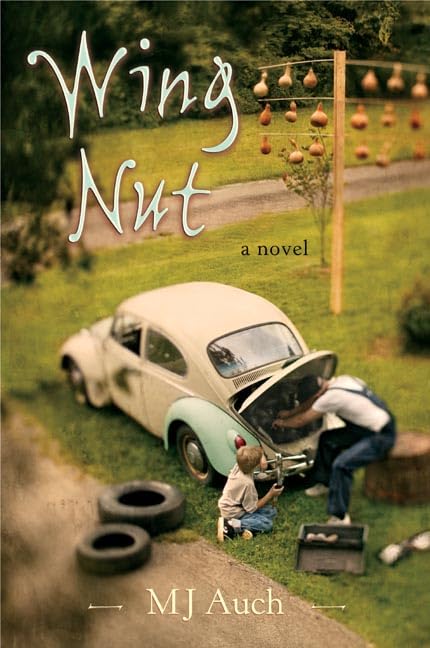
Image result for wing nut book
  1. Wing Nut by Mary Jane Auch
Wing Nut was another random library find that shaped me more as a person than perhaps any other book ever has. Most people have never heard of it, but it deeply impacted me. I read it when I was 8 years old, and the loving nature of the main character’s mother and the wacky old man and his purple martin birds were so original that I felt as if I knew them. This book connects to the theme of why literature is read. It felt so personal to me, the relationship between this mother and her son and their crazy, messed up life. It felt like a gift, to see a glimpse of their life. I often find myself thinking back on the book and its characters, wondering how my own view of them has changed as I grew up. I’d like to go back and read it again, to be able to fully understand how the novel influenced my personality and my character.
Image result for merchant of venice
  1. Merchant of Venice by William Shakespeare
The Merchant of Venice was a recent addition to my repertoire, but a much needed one. Personally, I don’t mind reading Shakespeare- again, it’s like a glimpse into another world. I enjoyed reading Merchant of Venice for its humor and interesting characters, and the original intent behind the writing. How we read and understand Shakespeare has changed over the ages, and reading it in the twenty-first century is an adventure all its own. For me, this connects to the theme of why literature is taught. It’s important to honor and analyze famous texts and keep them alive, to ensure that we see where literature came from and how it’s changed throughout the ages. Reading this play influenced me by encouraging me to look at things from multiple angles and examine how others view situations and take their point of view into account.